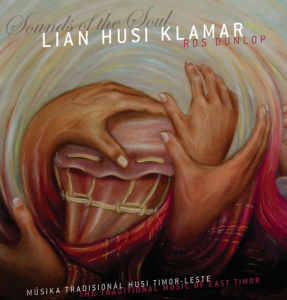
Someone recently asked me to write about the musical and audio-visual works I've composed to do with Timor-Leste. See what I wrote here. I was reminded that in times gone by, one could expect a newspaper review of performances - especially first performances - of one's work. No more. These days there might be on-line reviews, but a review in print is rare. Here are some excerpts from reviews written thirty years ago of my audio-visual piece Kdadalak (for the Children of Timor):
"The effect is both beautiful and wrenchingly sad. Whatever one chooses to call this work - audio-visual art? - it is a complete success." (Tim Morton: The Virginian Pilot, Tues Nov 13 1979)
"An effective collage of image and sound, (Kdadalak) remains a piece of powerful political art." (David Vance: The Sydney Morning Herald, May 25 1982)
"Kdadalak was one of the most remarkable fusions of sound and image that I've witnessed ..." (Nick Waterlow: Nation Review, 1977)
"In Kdadalak electronic music whispers and thunders through the auditorium as pictures, taken by Tweedie in East Timor shortly before the Indonesian invasion in 1975, flash across a screen above the stage. Gradually the faces fragment and dissolve into increasingly abstract color patterns ..." (David Lewis, Asahi Evening News, Tokyo, 1978)
"It is an impressionistic opus that exploits the complexities of projection of transparencies and taped music ... Kdadalak vivifies the ugliness of war." (Grover Oberle, The Ledger Star, Norfolk, Virginia, Nov 13 1979)
*
Sun July 06 2014:
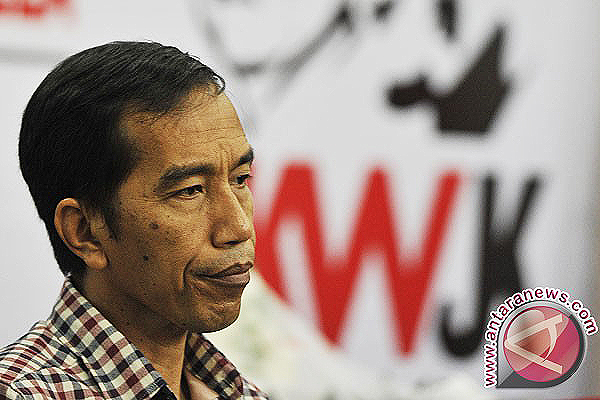
The imminent Indonesian presidential election, between Joko "Jokowi" Widodo and Prabowo Subianto, is of more than usual importance. Here's what the Jakarta Post had to say in its editorial yesterday:
Joko "Jokowi" Widodo
is the current governor of Jakarta ... He was previously the mayor of Surakarta ... (more)
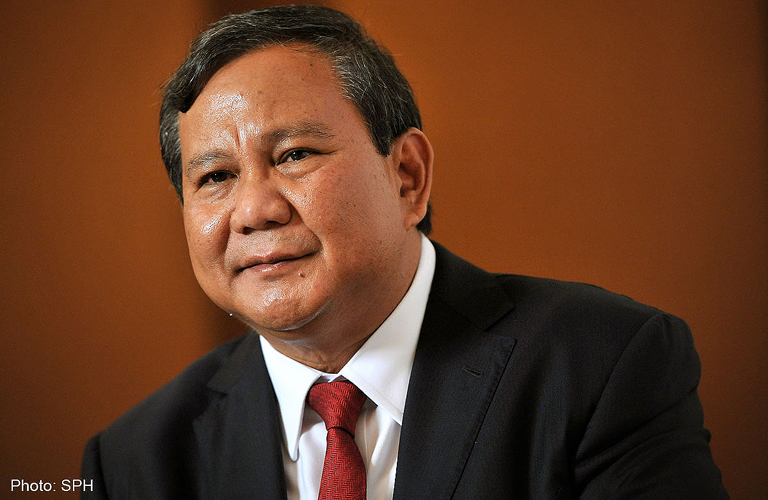
Prabowo Subianto
is a businessman, politician and former Lieutenant General in the Indonesian National Armed Forces. He is the former husband of Siti Hediati "Titiek" Suharto, the late President Suharto's daughter ... (more)
|
|
There is no such thing as being neutral when the stakes are so high. While endeavoring as best we can to remain objective in our news reporting, our journalism has always stood on the belief of the right moral ground when grave choices must be made.
We were not silent during reformasi. Neither have we been shy when power is abused or civil rights trespassed.
Good men and women cannot stay idle and do nothing. Speak out when persecution occurs, stand firm in rejecting the tide of sinister forces.
At certain junctures in a nation's life, its people are called upon to make stark choices. No longer is it a mere ballot cast for one candidate over another, but rather a moral choice on the fate of the nation.
Russia faced such a choice in 1996, during a runoff between independent incumbent Boris Yeltsin against Gennady Zyuganov representing the old-guard Communist Party. It was a moral choice for hope versus remnants of the past. They chose hope.
In five days this nation too will make a moral choice. In an election like no other Ñ divisive in its campaigning, precarious in its consequences Ñ Indonesians will be required to determine the future of our body politic with a single piercing of a ballot paper.
The Jakarta Post in its 31-year history has never endorsed a single candidate or party during an election. Even though our standpoint is often clear, the Post has always stood above the political fray.
But in an election like no other, we are morally bound to not stand by and do nothing. We do not expect our endorsement to sway votes. But we cannot idly sit on the fence when the alternative is too ominous to consider.
Each candidate in the presidential election has qualities in his declared platform. They have been dissected at length the past three weeks. And voters will sway one way or another based on it. Yet there is also a sizable part of society who are undecided in their preference.
In such a case, perhaps one can consider who not to vote for as their reasoning for that moral choice.
Our deliberations are dictated on the values by which the Post has always stood firmly for: pluralism, human rights, civil society and reformasi.
We are encouraged that one candidate has displayed a factual record of rejecting faith-based politics. At the same time we are horrified that the other affiliates himself with hard-line Islamic groups who would tear the secular nature of the country apart. Religious thugs who forward an intolerant agenda, running a campaign highlighting polarizing issues for short-term gain.
We are further perplexed at the nation's fleeting memory of past human rights crimes. A man who has admitted to abducting rights activists Ñ be it carrying out orders or of his own volition Ñ has no place at the helm of the world's third-largest democracy.
Our democracy will not consolidate if people's mind-set remains wedged in a security approach in which militarism is an ideal. A sense that one candidate tends to regard civilian supremacy as subordinate to military efficacy.
This nation should be proud of its military, but only if those in uniform acknowledge themselves as servants of the democratic, civilian governance.
As one candidate offers a break from the past, the other romanticizes the Soeharto era.
One is determined to reject the collusion of power and business, while the other is embedded in a New Order-style of transactional politics that betrays the spirit of reformasi.
Rarely in an election has the choice been so definitive. Never before has a candidate ticked all the boxes on our negative checklist. And for that we cannot do nothing.
Therefore the Post feels obliged to openly declare its endorsement of the candidacy of Joko "Jokowi" Widodo and Jusuf Kalla as president and vice president in the July 9 election. It is an endorsement we do not take lightly.
But it is an endorsement we believe to be morally right.
|
|
*
Sun June 29 2014:
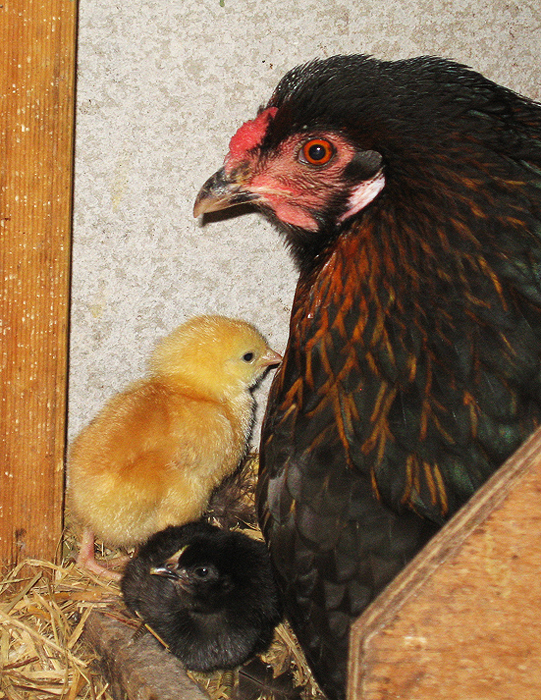
Sad news: a few days ago our Mother Chook, Zorro, departed her mortal coil and is now happily pecking away in Heaven's Eternal Chook House. She was the archetypal chook, the survivor, one of our first three Bearers of Golden Goodness. Unlike the others, she died of old age - how many chooks can say that?? Well, OK, none, 'cos they'd be dead. And, anyway, they can't speak, or so people believe. But Zorro spoke to me, eloquently, not afraid to cluck disapprovingly when things were not to her taste, yet she would show gratitude, a smile on her lips, for all the good things I provided. Despite being the most senior chook in the chook yard, she was rooster Dave's favourite, which must be encouraging for old chooks everywhere. She leaves lots of happy memories as well as several daughters and granddaughters. RIP, Zorro, my fine feathered friend; we'll be lucky to see your like again.
My daughter Alice wrote: "Sorry to hear about Zorro...what a trooper she was! One of the great chickens... strong, motherly, caring, led by example...she will definitely be missed."
|
|

|
*
At 1pm today, ABC-FM broadcast a Sunday Live program featuring pianist Arnan Wiesel. The blurb said:
"Pianist Arnan Wiesel performs one of the masterpieces of piano literature, Bartok's Piano Sonata. We'll also hear Musica Ricercata, a piece in which Ligeti pays homage to Bartok and sometimes develops only one or two notes with his focus on a series of fascinatingly changeable rhythms. Martin Wesley-Smith's witty waltzes have the last laugh without being in the least Hungarian."
*
Mon June 23 2014:
A letter, dated today, from a friend of mine, activist Vacy Vlazna, to Australia's Foreign Minister Julie Bishop:
|
Dear Minister
Regarding the matter of the cancellation of passports of Australians fighting in Syria and Iraq, I look forward to you also revoking the passports of all Australians serving, going to join up, or who have served, with the Israeli OCCUPATION Forces (IOF) to commit 'acts of barbarity' against Palestinian civilians suffering under Israeli OCCUPATION.
The government should 'keep them out' as they are involved in war crimes 'defined by savagery and brutality'
*when protecting the ILLEGAL settlements, in OCCUPIED Palestine,
*
when manning checkpoints in OCCUPIED Palestine,
*
when smashing into Palestinian homes at night and ripping frightened children from their families then criminally ransacking and looting these homes in OCCUPIED East Jerusalem and OCCUPIED West Bank of OCCUPIED Palestine,
*
when extrajudicially killing unarmed youth such as the 3 young men (including a child) in the past two days in the OCCUPIED West Bank of Palestine,
*
when participating in ILLEGAL collective punishment by kidnapping Palestinians, such as the 400 innocent persons over the past 10 days, to incarcerate them ILLEGALLY in Israeli prisons under administrative detention and expose them to the renewal of banned torture methods ordered by Netanyahu.
The Australian government should take this matter very seriously by investigating Australians who are serving or who have served in the IOF and returned to Australia.
I also ask when will the Australian government publicly condemn Israel's present rampage of collective punishment against the Palestinian population and demand that it immediately desists? Please email your answer forthwith.
Sincerely
Dr Vacy Vlazna
|
*
While I'm about it (I thought I'd given up this blog), let me recommend a recent speech by Australian playwright Andrew Bovell. It was the keynote speech at the National Play Festival at Sydney's Carriageworks. As their blurb says, Harold Pinter at the Ivy covers the current state of Australian playwriting, theatre's place in broader political discussions and society, as well as some moments of triumph and humiliation from Bovell's career. Bovell most recently won acclaim for his adaptation of Kate Grenville's novel The Secret River, for which he won the Helpmann Award for Best New Australian Work and Best Play. He's also known for his play Speaking in Tongues, which was turned into the award-winning film Lantana.
A lot of what he writes about theatre can be applied to the so-called "serious music in the classical tradition" scene in this country. For example:
|
"simply doing the classics with an Australian aesthetic or in Australian accents doesn't answer my craving for a theatre that is particular to our time and place and past and future"
|
could easily read:
|
"simply doing the classics with an Australian aesthetic or in Australian accents doesn't answer my craving for a music that is particular to our time and place and past and future"
|
And this (my changes in brackets):
|
"At this moment in our history I find myself hungry for content ... For plays (pieces of music) that are saying something. I want meat on the bone. I want to think. I want to be upset. I want to be shocked and shaken. I sense a rise of conservatism in this country. A narrowing of opportunity. A widening of the gap between rich and poor. Between black and white. A meanness of spirit has crept in to the social discourse. I want to challenge it. I want to get in its way. And I don't know if we can do that with Chekov (Beethoven) anymore."
|
Too much Australian new music, including much of mine, is bland, white, safe, conservative, irrelevant ...
|
*
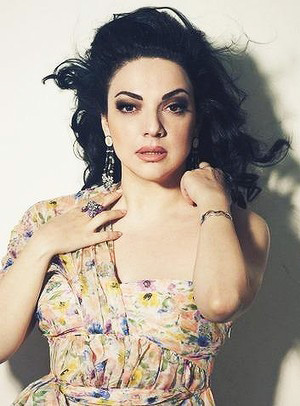
According to today's Sydney Morning Herald, in an article by Debbie Cuthbertson, "Opera Australia has released soprano Tamar Iveri from her contract following a furore over 'unconscionable' homophobic comments posted on the singer's Facebook page."
I suspect that AO probably had no real alternative after protests, and threats to disrupt Ms Iveri's performances, by opera-lovers. Initially AO said nothing, no doubt hoping that the controversy would fade away, but eventually it had to act. According to ABC News, "Jed Horner from the New South Wales Gay and Lesbian Rights Lobby says it is a positive development but was a long time coming.
'I think the initial response left much to be desired and when they first came to light they should have actually been addressed,' he said.
'There should have been efforts by Opera Australia to look into the background of this person because there has been allegations made that this is not the first time, that there's actually been other comments as well. Those should have been addressed by Opera Australia when they arose.'"
|
|

|
An English translation of Ms Iveri's letter can be read here. Dennis Altman has written an article titled Tamar Iveri is a homophobe -
was Opera Australia right to sack her? in Australian on-line discussion site The Conversation. Her defence - that the offending letter was changed by her homophobic husband and uploaded by him without her permission - is questioned by Ivan Crozier, one of the responders to Altman's article:
|
Iveri lied constantly about her statements. She tried to portray her letter as a response to LGBT pride marchers as interrupting an event to commemorate fallen Georgian soldiers - but this happened on a different day. She said that her non-appearance at the National Opera of Paris was due to an indisposition - but she was sacked because of her homophobia was made known to the Parisian opera by the Georgian LGBTQI groups. She said her husband wrote the letter - but this story was fabricated only for the Australian audience, because she accepted responsibility for it in her response to the Parisian sacking. We do not want anyone on our stages who says that LGBTQ people are like "cancer", or "faecal matter" or should "have their jaws broken" ... Public monies should not be spent on people who express such opinions in public.
Opera Australia should have stood up for LGBTQI rights much sooner than they did - they should have condemned her hate speech before they were pressured into it ...
|
Doug Pollard writes:
|
She did not recant, or show any evidence of seeing any light. She changed her story repeatedly in an attempt to escape responsibility for her words, and when that failed, used her husband as an excuse. At no point did she demonstrate genuine contrition or make any concrete effort to make amends. Now she claims she only wanted to protect gays from the criminal elements who beat them up, as she feared,which is clearly not the intent of the original letter, nor is any such altruistic motive evident in her subsequent interviews with the Georgian media. She is still claiming she has been misunderstood throughout ...
|
A few years ago, Condoleezza Rice visited the Sydney Conservatorium of Music, where I used to work, and gave a speech. If I'd still been employed there I would have boycotted the event on the grounds that the Conservatorium should not be hosting a proven liar and probable war criminal. When I espoused such views I was jumped on by the usual suspects - including some of those most vocal in their condemnation of Ms Iveri - on the grounds that we should respect the office of US Secretary of State regardless of who is occupying the position. I have some sympathy for that view, but I would argue that a Secretary of State who supports and facilitates a full-scale invasion of another sovereign state, on the basis of blatant lies, with horrendous consequences that continue to worsen even today, loses the right to have her office respected. If Ms Iveri deserves to be boycotted for writing a hateful letter, Ms Rice deserves at least the same for her role in a hateful invasion.
*
Sun June 22 2014:
A rare entry, to advise of my latest health news:
About five years ago I was diagnosed with bronchioalveolar carcinoma, a rare form of lung cancer. I had one third of my right lung removed, then had a course of chemotherapy at the end of which I was pronounced C-free. But the tumour returned. Since then I've been on a drug called Tarceva (Erlotinib), which has done a great job in stopping the tumour growing. It has a few side FX, of course, the most debilitating being severe breathlessness.
Last Monday I had a scan. Then, on Thursday, I went to see my oncologist.
He announced that he wants to take me off Tarceva (my condition is gradually, though slowly, deteriorating) and put me on a new experimental treatment that "wakes up" lymphocytes in the immune system and empowers them to kill cancer cells. Something like that (I don't fully understand it). I'll be having a PET scan in the next few days, then he'll take some of my lung tissue for a biopsy that will determine whether the treatment is likely to be successful in my case. If it is then I go onto a trial that my oncologist says he has a "gut feeling" will be successful. Whoopeeee.
I feel pretty good except for the breathlessness problem - but as that's probably a side effect of the drug I'm currently on, perhaps that will improve when I change to the new one.
I asked about alternative treatments, including asparagus, turmeric, cannabinoids, cannabis oil, lemon juice-and-baking-soda, and so on (I've received a lot of suggestions from friends): he was scathing about them all as a cure, although he thinks that dope can be quite effective in dealing with various side FX. But I already knew that. He regularly takes my case and others to a local Lung Group - a gathering of oncologists and respiratory physicians - that reviews cases like mine and whose members make recommendations re treatment. As far as I can tell, I'm in excellent hands.
That's me updated: no worries!
*
Wed Jan 22 2014:
Time for me to wrap this blog up. It has been a useful exercise for me, acting to some extent as a personal diary and serving as a platform for the occasional political rant. But I seem to have less and less time to maintain it and decreasing interest in doing so. I'll keep it alive so that I can add stuff if at some point in the future I find myself with something to say and the time and enthusiasm for its on-line expression ...
|
*
Wed Nov 13 2013:
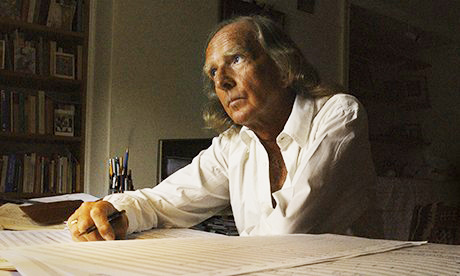
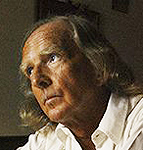
I've just heard of the death of English composer John Tavener (1944-2013). Read his obituary (in The Guardian, by Michael J Stewart, today) here. An excerpt:
"For the composer John Tavener, who has died aged 69, creativity sprang from religious faith. Many of his works held an appeal for audiences that did not necessarily identify with contemporary music or the theological values from which he started. However, their response meant a great deal to him: he took their engagement as an affirmation that his music was operating on a spiritual level.
"It took until halfway through Tavener's career for him to receive substantial recognition. This came with The Protecting Veil (1989), the "icon in sound" for cello and strings inspired by the Mother of God and premiered at the BBC Proms by Steven Isserlis. The soloist found it to be "a gorgeous, romantic piece of music; the first performance was one of the highlights of my concert life", and his 1992 recording was a bestseller. Five years later, Tavener achieved global celebrity when his Song for Athene (1993) closed the funeral service for Diana, Princess of Wales ..."
|
|
*
Tues Nov 12 2013:
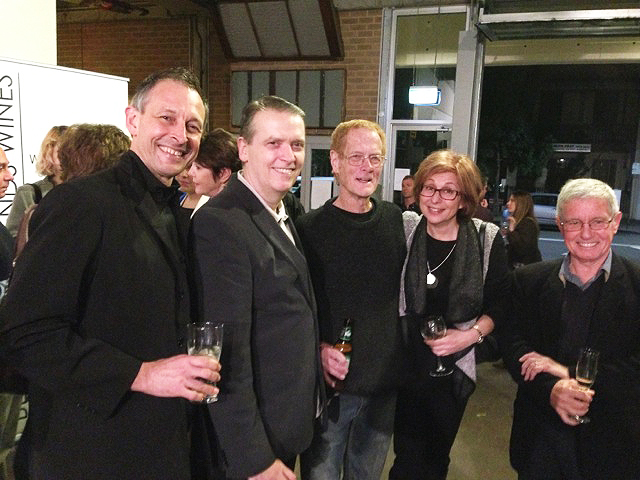
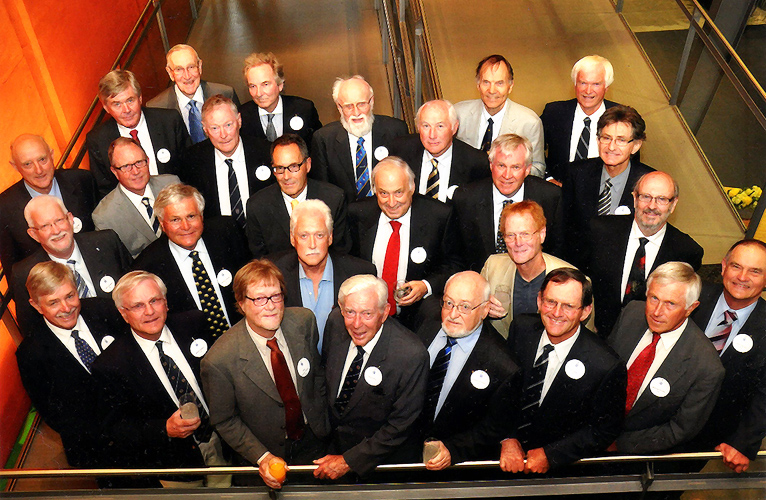
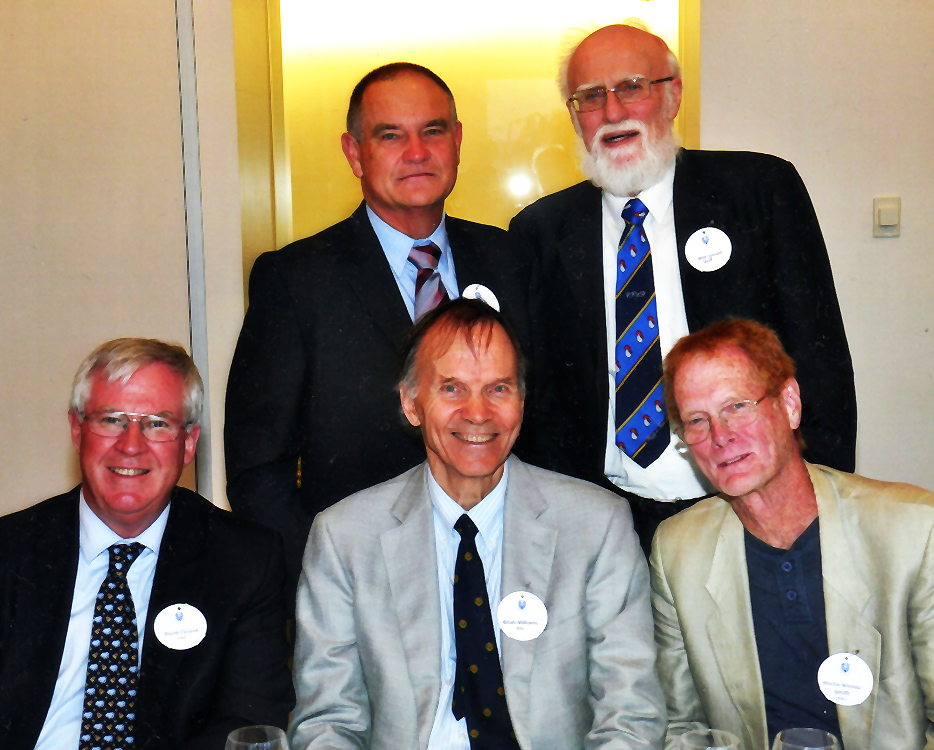
Got back yesterday from a trip to Adelaide for a school reunion. I can't get away with denying it so I might as well admit that it was the fiftieth anniversary of my leaving school. Crikey! Here is a shot of the collected blokes (it was a one-sex school). This shot shows Dave Cleland (front left), Brian Williams (front centre), me (front right), Kent Wallis (back left) and Dick Leeson (back right). Most of the blokes there I hadn't seen for those fifty years - it was very enjoyable catching up ...
*
Brother Rob ("Wes") was in charge while Peter and I were away. We had a WWOOFer there, Ionelle, who received a visit from another WWOOFer, Laetitia, from Cameroon, who blogged about it here. She includes lots of photos of where I live.
*
While in Adelaide I saw critic and music educator Elizabeth Silsbury, who subsequently sent me a review she'd written for Music Forum magazine and that I'd previously missed. It was of the Guitar Trek CD Six Fish, which includes my piece Songs and Marches:
Six Fish
Guitar Trek
Tall Poppies TP 221
Reviewed by Elizabeth Silsbury
A sincere tribute to their generous sponsor, the late Edda Filson, special thanks to luthier Graham Caldersmith, originator of the Guitar Family idea and promotion for four different Australian composers - Guitar Trek pay credit where credit is due in the quirkily named disc celebrating their 25th anniversary. They might also have acknowledged the recording engineer Niven Stevens and the ANU School of Music Studio, who have ensured high quality reproduction.
Timothy Kain, Minh Le Hoang, Daniel Mckay and Harold Gretton of Guitar Trek have been known to pluck away at Tchaikovsky and Brahms in pubic concerts. This time, dinky-di guitar pieces only.
Four of the six items have drawn inspiration from the wonderful world around us - flora, fauna, sea, sky.
Kain and co have been mindful of the cognoscenti, naming the various types of guitar (2 x nylon string classical, 1 x dobro resonator, 1 x 12 string) for their title piece. Ichthyologists might discern references to the marine creatures in Nigel Westlake's Six Fish. For laywoman me, the Slingjaw Wrasse sounds like a bully boy, Leafy Sea Dragon (emblem of my holiday refuge, the Fleurieu Peninsula) drifts and darts trailing seaweedy bits.
Phillip Houghton's Nocturne started life as a piano piece with a whimsical verse about dawn, a beach and a man. His programme notes for Wave Radiance take us deep down into the ocean, with exotic sea creatures flashing past a repeated figure.
Richard Charlton looks heavenward for Capricorn Skies. Although ambitious, his aims as expressed in words are largely fulfilled in his soundscapes. Pictures of The Southern Cross over a black sea, A sky for dreaming and Opal sky with birds come readily to the mind's eye.
Charlton finds four minutes' worth of material in an old song in Dreams and Dances on Moreton Bay. Eminently listenable, morphing from reverie into knees-up with a jolly bass winning the tune. My appetite is whetted for a taste of the original setting - bush violin and guitars made from fence-palings, a log and a crate.
Martin Wesley-Smith also looks to existing material. His Songs and Marches starts with a 12th century Andalusian melody for ud and draws into the mix bits and pieces from all over the place and several centuries.
'Some may care to see a political theme in this piece' he comments. Ha! Wesley-Smith political?
Some song fragements are immediately recognizable as jingoistic propaganda of countries we know and love, others named as belonging to the jack-booted Hitler Youth; marches are underpinned by percussing on the guitar bodies. Sophisticated settings, occasional tiddley poms, references to jazz, a wilful waltz, finally a return to the dear little tune, surviving , no matter what.
All are set with his masterly touch and played with infectious enjoyment by the Guitar Trek - guitar is his instrument, among many others, after all, and it shows. Readers with long memories still yearn for a CD of "Banjo the Singing Rabbit" and "Mister Thwump".
Elizabeth Silsbury
|
It's an excellent CD, that one. I feel privileged having had a piece selected for inclusion. It may be purchased from the Tall Poppies website.
*
I haven't seen any evidence of it, but surely the most ardent climate change "denialists" must occasionally think "What if I'm wrong?". It's getting harder and harder to dismiss phenomena such as the current disaster in the Philippines, hurricanes Sandy and Katrina, and the recent New South Wales bushfires coming so early in the season, as part of natural variation. Aided and abetted by the new government in Canberra, they will continue to cherry-pick the vast amount of evidence, ignoring uncomfortable conclusions while, instead, getting hysterical over something a so-called "warmist" said in a private email.
*
Fri Nov 1 2013:
Have just seen a clip of Billy Joe Armstrong and Norah Jones talking about their new album of Everly Brothers songs, called Foreverly. Takes me back: when my twin brother Peter and I were about 14 we started singing Everly Brothers songs together as a duo. Songs like Take a Message to Mary. By then I'd started playing guitar, and Peter plucked a cello as if it were a double bass. Then a kid at school - Keith Conlon - whose father had a drum kit offered to play drums with us. We accepted, and were thereafter a trio. Or, rather, a rock star duo plus backing. He had on his kick drum a sign saying The Weserly Brothers & Me. He became a full member of the group (rather than just the drummer) when we were doing Bird Dog: he contributed the "He's a bird" interjections with more style than Peter or I could muster, so we let him do them, then cautiously allowed him to sing a bit. Later, when we'd become a folk trio in the style of the Kingston Trio, Brothers Four, Chad Mitchell Trio etc, he became the main vocalist. Just today Keith announced his impending retirement from the South Australian media scene, where he has been employed for 50 years. When he presented the popular Channel 9 television program Postcards SA (1995-2011), he was dubbed "Mr South Australia".
*
Mon Oct 28 2013:

|
I spent most of last weekend having a great time at the Kangaroo Valley Folk Festival. Performances I particularly enjoyed included those by Mongolian throat singer and horse head fiddler Bukhu, vocal and instrumental quintet Chaika, singer/comic/magician Mic Conway with flat-picking guiyar champion Robbie Long, our own singer/songwriter/guitarist Danny Ross, the well-known female indigenous duo Stiff Gins, and beatboxer, sideways yodeler, multi-instrumentalist, live looper etc the amazing Mal Webb. I still enjoy music in the folk tradition: that of the Stiff Gins, for example, who combine interesting words and music in relevant, challenging songs. Of course, folk festivals these days are eclectic affairs where almost anything goes. Hard core rock'n'roll doesn't fit, nor mindless pop. The musical eclecticism and musical excellence of Chaika ("fusing traditional elements of Balkan and European music with original music tinged with jazz and Celtic") fits right in. The photo at left is of singer, violinist and guitarist Susie Bishop. Click on it to see the whole band (the other members are singer and clarinetist Laura Altman, singer, percussionist, pianist and piano accordionist Laura Bishop, double bassist Johan Delin, and singer, pianist and piano accordionist Emily-Rose Sárková). Their performance features excellent playing and singing, intriguing arrangements and compositions, good variety, and attractive personalities and presentation. Their pieces often abruptly shift gears, and the texture changes: we're bopping along with an instrumental when suddenly we're into four-part female vocals. Or three-part, or two-part. They seem to be as at home in 7/8, or 7/4, as they are in 4/4. Most of all I love the soul with which they imbue most pieces, making some of them very moving even when I don't know the language or even what the piece is about. Very un-Conservatorium-like ...
|
*
I mentioned below (Tues Oct 8) that PM Abbott said "the people of West Papua are much better off as part of a strong, dynamic and increasingly prosperous Indonesia". West Papuan activist Benny Wenda disagrees. In an article titled West Papua: things are not getting 'better' for us in the Guardian, Oct 11 2013, he writes:
|
Ever since West Papua was annexed and colonised by Indonesia in 1969 through a referendum ironically called the Act of Free Choice (we call it the Act of No Choice), my people have endured nothing but violence, hardship and human rights abuse. Maybe Australia's prime minister Tony Abbott would then care to explain how things in West Papua are "better, not worse", as he recently stated? Is it possible to have a better state of colonialism? Has Indonesia created a better state of fear? Better forms of intimidation? Better ways to suppress free speech? ...
[more]
|
Selpius Bopii writes West Papuans live in terror, Mr Abbott in the Guardian, Thurs Oct 24 3013:
|
Tony Abbott is wrong, and his words are extremely hurtful to the people of Papua. The situation for the Indigenous population of Papua is getting progressively worse, not better. Even Lukas Enembe, the governor of Papua, has stated that the province is experiencing a decline in key areas such as health, education and the economy ...
[more]
|
Abbott is desperate for Indonesian assistance in realising his base political slogan "Stop the Boats". He's a committed Christian (a Catholic), but that's not enough, apparently, to engender any concern for the victims of Indonesia's policies in West Papua.
Meanwhile, A report that claims Australian helicopters were used by Indonesia in a 1970s operation that killed more than 4,000 Papuans looks set to be dismissed by Jakarta, reports Kate Lamb on the SBS website:
|
Allegations of genocide, rape and napalm bombs dropped on the restive province of West Papua in the late 1970s are likely to be 'stonewalled' by the Indonesian government, analysts say.
According to an extensive report released by the Asian Human Rights Commission this week, thousands of West Papuans were killed in aerial raids, including by cluster bombs and napalm, in a bid to quell sectarian tensions following the national elections in 1977.
The report also states that two helicopters supplied by Australia were used during the military operations ...
[more]
|
*
Tues Oct 22 2013:
Parts of New South Wales, especially the Blue Mountains, are expecting catastrophic fire conditions tomorrow. But here, south of Sydney, it's currently wet and chilly, with no sign of danger. It looks as though this weekend's Kangaroo Valley Folk Festival will be unaffected.
*
Environment Minister Greg Hunt has rebuked Greens deputy leader Adam Bandt, accusing him of politicising the NSW bushfires: "There has been a terrible tragedy in NSW and no one anywhere should seek to politicise any human tragedy let alone a bushfire of this scale," Mr Hunt said. This prompted Nick Feik to write (in the Monthly, Mon Oct 21 2013):
|
Is it okay to talk about climate change yet? Or should we wait until the fires stop?
What if they keep burning for weeks?
What if the fires go all summer? Do we wait until the weather cools down?
If the fires stop, and we start talking about climate change, but then the fires start again, should we stop talking about climate change?
We were talking about climate change when the fires started. Should we have stopped?
If carbon-tax legislation is before parliament and the fires are still going, can we talk about that?
Does everyone need to not talk about climate change? Should climate scientists find something else to talk about while the fires are burning?
What's the minimum distance you should be away from the fires to talk about climate change? Do you need to be overseas?
Or is Tasmania far enough away? Perth?
Can someone who's been affected by the fires talk about climate change? What about their close friends? Or relatives? What if they ask us about climate change? Can we respond?
Can a fire-fighter talk about it?
If we can't talk about climate change, can we at least talk about unseasonal weather extremes? (Can people in Canberra talk about the severe frosts?)
So, we can talk about the weather, but not the climate?
Or can we talk about climate change, just not in political terms?
What do people mean by 'politicising' climate change? Is that the same as talking about it? Or is it talking about doing something about it that's the problem?
When people are killed by guns, can we talk about gun control?
In a shark attack, can we tell people to get out of the water?
Who do we ask to find out when we can talk about climate change again?
And is there anything else we shouldn't be talking about, just to be sure?
|
Yes, Nick, there is something else we shouldn't be talking about but as it's something we shouldn't be talking about I can't talk about it ... Tim Hollo can, however, and did, yesterday, in an article in yesterday's Guardian titled Why we need to politicise the bushfires:
|
As I write, several of my close friends are among thousands of people across NSW facing the real and immediate terror of bushfires threatening their homes.
But there is a no less real and even more terrifying fire threatening the home of every single one of us. Looming over the next ridge and coming our way at high speed is the catastrophic destabilisation of the global climate which has nurtured human civilisation. Like a bushfire lit by despicable arsonists, this is a fire of our own making. And, while it is less easy for us to see, it is a far more terrifying fire because we don't have the option of leaving our home and saving ourselves. Our home is our whole world. We have no alternative but to stay and fight for our lives ...
[more]
|
*
Mon Oct 21 2013:
This morning we had a visit from a beautiful diamond python (Morelia spilota).
There are dreadful fires in New South Wales at the moment, the worst, most destructive being in the Blue Mountains west of Sydney. There have been no fires, so far, near us - but conditions are worsening, with Wednesday shaping up to be a shocker. We're as ready as we can be ...
*
Fri Oct 18 2013:
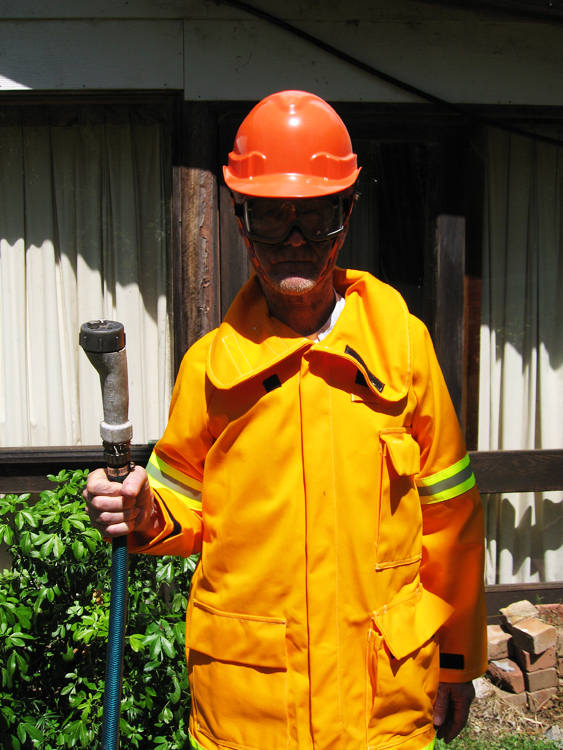
It was a horrendous fire day in New South Wales yesterday. Fortunately we were OK despite the potentially-deadly trifecta of high heat, low humidity and strong winds. The Blue Mountains, west of Sydney, were not so fortunate, however: as Megan Levy reports in the Sydney Morning Herald, "Streets of homes have been razed in the Blue Mountains and hundreds of residents have spent the night in evacuation centres after about 100 fires ravaged the state on Thursday in the worst bushfire emergency in more than a decade." Read more here. More dangerous fire conditions are on their way. We've checked our pumps, tightened connections, and tested the sprinklers that are stationed around the house ready to drench it and surrounding areas should a fire be on its way. We have protective clothing ready should we decide to stay and fight (this will depend partly on the official rating: if it's "catastrophic" then the advice is to get out, go somewhere safe, and hope for the best).
*
With the help of brother Rob and WWOOFers Heather and Thomas I've dug over, prepared and planted my vegetable garden. There's still a lot to do (isn't there always with a garden?), but at least some vegies are in and have started growing while I catch up on other things.
*
I heard yesterday that the Australia Ensemble has programmed a performance of my piece db at one of its subscription concerts next year (8pm Sat August 16 2014, Sir John Clancy Auditorium, University of New South Wales). The blurb in the brochure says: "Martin Wesley-Smith's db honours the memory and achievement of one of the important figures of Australia's musical efflorescence of the last seventy years, the late Don Banks (hence the initials that form the title of this score), while affirming Wesley-Smith's own high and individual talents."
*
I've recently made digital versions of the sheet music of two kids' songs, on request: Who Stopped the Rain?, arranged for six voices a cappella, and Climb the Rainbow, arranged for four voices a cappella. Feel free to download copies for use with your choir or vocal group. Rainbow comes from 1980 or so when my wife at the time, Ann North, was writing scripts for various children's radio and television programs. She needed a song about a rainbow but couldn't find one, so she jotted out a few words and gave them to me, saying "by 9am, please", meaning that by 9 o'clock next morning she needed her lyric fashioned into a song. I did what I was told, as always, coming up with what has proved to be a beautiful and enduring little song. Ten years or so later I arranged it for voices. Rain is even older - from 1965, in fact. Brother Peter and I wrote it as part of a children's piece called Mister Thwump, which our vocal and instrumental trio The Wesley Three recorded for CBS on a large flat black round thing made of vinyl called an "LP". I arranged it for six voices (SSATBarB) in 1990 or so for The Song Company, who have performed it many times.
*
Tues Oct 8 2013:
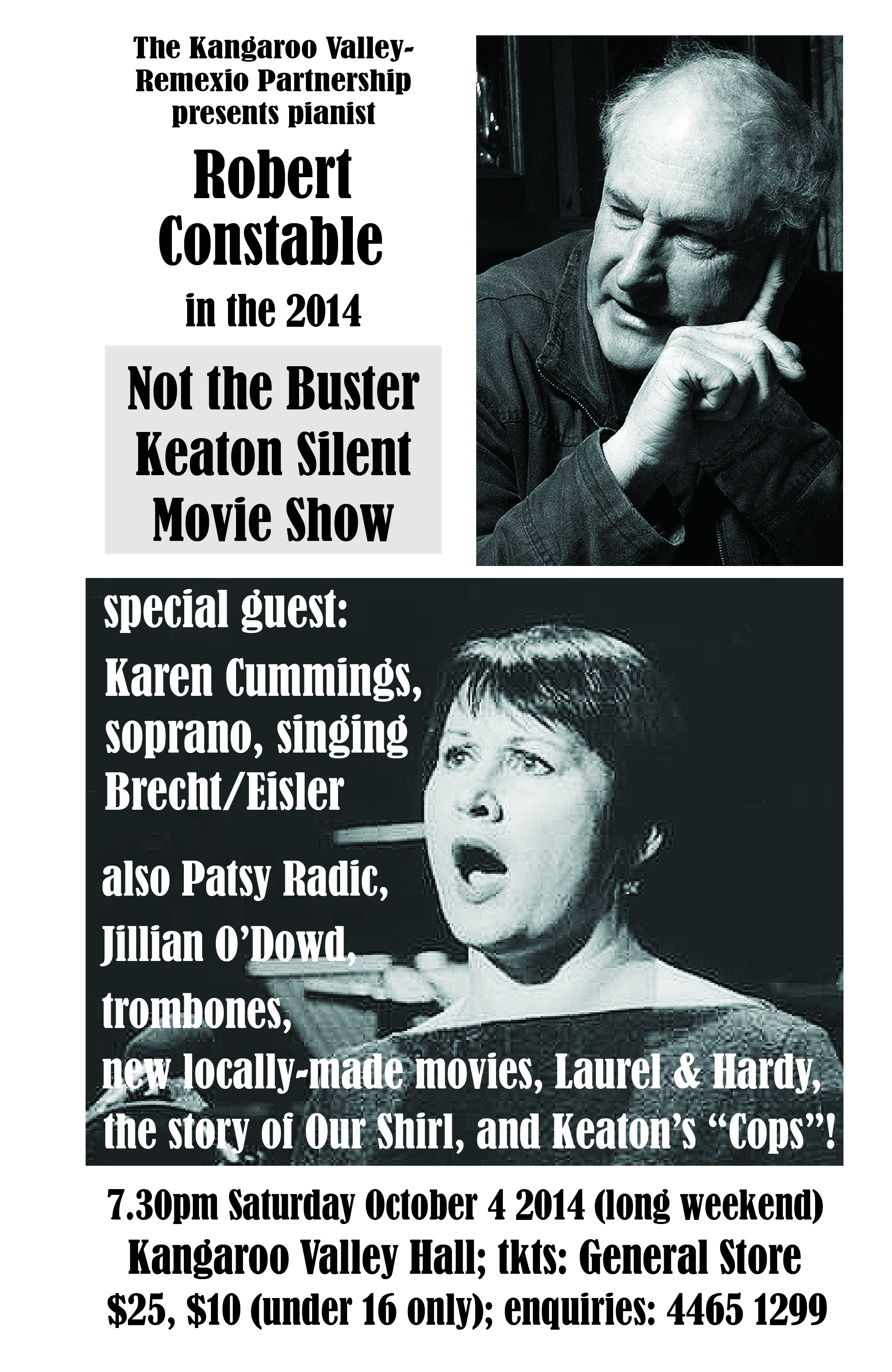
The fund-raising film event/concert Not the Kangaroo Valley Buster Keaton Silent Movie Show happened last Saturday night and was generally considered a great success. Phew! Big effort. We raised over $3000 for projects in Timor-Leste, which ain't bad for a little old country hall. See the on-line version of the printed program here. Many thanks to all who contributed, especially pianist/composer Robert Constable and singer Amelia Cormack.
Excerpts from some of the post-event emails received:
|
Dear Martin et al, Thank you so much for a very enjoyable night last night. The Not the Buster Keaton Silent Movie Show was just as much fun as the Buster Keaton Silent Movie Shows. I loved the variety ... lots of it made me laugh (loved the Tri Hards), Waterdrawn sent me into a trance it was so beautiful ... and what can I say about Pete's Ol' Man River with those almost unwatchable photos ... a great night enjoyed by all ...
|
|
Congratulations to you and all involved in creating last night's show - arguably the best yet seen in the Valley. I don't want to be selective by copying this email only to those for whom I have email addresses, but the contributions of Robert Constable, Peter W-S, Belinda and Libby clearly deserve special mention. And I can't imagine why I got a bio in the program, when Diana and Sarah contributed so much more to the success of Albert's Air.
A hard act to follow, but I'm sure you'll aim to outdo it next year.
|
|
Thanks for a great evening! It went really well, and was fascinating in many respects. Good turnout! All your hard work paid off! I hope it raised some decent dosh for ET. Loved Libby's fillum. I hope you were pleased, and that you had enough help to pull it all down.
Now you can relax!
|
|
Martin and Peter, we really enjoyed the show last night, lots of variety, lots of laughs and heaps of talent. Enormous amount to organise for you guys so good on your for pulling it off. Amelia was wonderful, we are confirmed fans. Sarah Butler was amazing, good writing Pete. Films were great too, and PMs piano was lovely, thanks Robert. Libby's ads were very funny, she is a crazy talent for sure. Anyway all great, the Old Tries done good too.
... Well done lads ...
|
Congratulations on a fantastic show and slick production and thank you for inviting me to be part of it! It was an honour and pleasure!
Hope you raised lots of money for the cause and enjoyed your success!
|
Many many thanks to you and the creative team that brought such joy yet again to our community. Images supporting Ol Man River were thought provoking and a poignant reminder of the savage treatment dealt to indigenous peoples throughout the world.
Good on you for pushing us out of our comfort zone and challenging us to connect the dots of ongoing brutality taking place in West Papua.
|
*
I'm trying not to comment on the Abbott government's appalling start (the hypocrisy, the lies, the snouts in the taxpayers' trough, and so on), but Abbott's eagerness to appease Indonesia in the hope that it will "stop the boats" on his behalf spells grave danger for the indigenous people of West Papua:
|
Violence in West Papua
I hope the West Papuan students who entered the Bali consulate did leave voluntarily ("Protesters breach consulate walls in protest about torture", October 7). Some reports have indicated they were told they would be handed over to the Indonesian military if they did not leave. Budi Hernawan's study on torture in West Papua by the security forces is enough to raise grave concerns about such a threat were it given by consular staff.
On his first visit to Indonesia as Prime Minister Tony Abbott said the "government of Australia takes a very dim view, a very dim view indeed, of anyone seeking to use our country as a platform for grandstanding against Indonesia. We will do everything that we possibly can to discourage this and to prevent this." I hope this is not a threat to human rights activists who might try to raise concerns about the ongoing human rights abuses in West Papua.
Joe Collins, Australia West Papua Association, Mosman
|
That was published in today's Sydney Morning Herald.
I think it's important, from many points of view, that Australia strive for an excellent relationship with Indonesia. But being good friends doesn't mean refraining from commenting when the other side engages in appalling behaviour, like the TNI's actions in West Papua. Abbott's threat to human rights activists is alarming. What will he do? What can he do? In the concert in Kangaroo Valley Hall last Saturday, a rendition of Ol' Man River was accompanied by images of exploitation, including shots taken in West Papua. Are such performances to be banned in future, or will they be raided and shut down by Commonwealth police? Will Abbott attempt to prevent comment such as this one? Whither our fragile democracy?
Meanwhile,
|
On Monday, Abbott told reporters in Bali that "the people of West Papua are much better off as part of a strong, dynamic and increasingly prosperous Indonesia".
The Australian prime minister appeared to shrug off reports of human rights abuses in the troubled province, arguing the situation in West Papua was "getting better, not worse", courtesy of reforms implemented by the Indonesian president, Susilo Bambang Yudhoyono.
[more]
|
"Better off" compared to what? The notion that the people of West Papua might like to decide for themselves what's best for them appears not to have crossed Abbott's mind. Apparently he is happy for them to be sacrificed on the altar of expediency.
An article in yesterday's Sydney Morning Herald - West Papuans 'tortured, terrorised', by Jenny Denton - must be in Abbott's firing line. Whatever was the SMH thinking in publishing this deviation from what is now Australia's official line?
Meanwhile, I find Abbott's hypocrisy over parliamentarians' expenses quite shocking (see Tony Abbott claimed $600 to attend Peter Slipper's wedding in yesterday's SMH). There are some great comments from the public, including this one from Redsaunas, 7.02am Oct 8:
Anyone who paid any attention whatsoever knew that Abbott was a monumental hypocrite.
But even those of us in the hard-core Abbott-hating community never dreamed that he would plum such fathomless depths of double standard.
OK. Either Slipper gets off his charges and is allowed to repay his claims. Now. Or the AFP is called in and Abbott and his friends face their own music.
Either way, Abbott's credibility is irretrievably dead in the water. Didn't take long, did it?
|
For something frightening and shocking, read about the highly secretive Trans-Pacific Partnership that's coming up.
*
Wed Sept 25 2013:
|
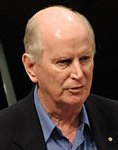
I've just heard that Australian pianist, conductor, composer, teacher, competition juror and music administrator Rex Hobcroft has died. As Director of the New South Wales State Conservatorium of Music (now Sydney Conservatorium of Music), he gave me my first full-time job, proving to be a wonderfully encouraging and supportive boss. He took "the Con" from a sleepy tradition-bound public service institution to a modern sometimes-dynamic tradition-bound "music university ... in which specialised musical disciplines ... enriched each other."
Fellow composer Vincent Plush writes:
|
Sad news this week. Rex Hobcroft, one of the true gentlemen and quiet dynamos of the Australian music scene, died in Perth on Monday, aged 88. Rex was Director of the Sydney Conservatorium from 1972-82 and, in that capacity, had the bravery/audacity in March 1972 to hire on a green and immature 22yo stripling as its youngest ever permanent appointment. Farewell, dear Rex, mentor to us all.
|
The stripling was, of course, Vincent himself. We eventually forgave Rex for that appalling lapse in judgement (er, that's a joke ...)
|
*
Sun Sept 22 2013:
|
Yesterday's Trek for Timor, put on in Kangaroo Valley by The Kangaroo Valley-Remexio Partnership was a great success. Here's a report by Les Mitchell, one of the organizers:
|
Saturday September 21st turned on a perfect day for the third Trek for Timor, to raise funds for solar lighting in the villages of Remexio in East Timor. 287 walkers enjoyed the beautiful spring weather, with 135 hardy souls undertaking the 50 km route and 148 people doing the 11 km walk. Spring wildflowers added to the enjoyment of the event. As of the following morning, Trek participants had raised $67,000 which will light up nearly 400 houses in East Timor. The Kangaroo Valley Remexio Partnership congratulates all the walkers for their fantastic efforts and their wonderful spirit on the day of the Trek. KVRP extends their great appreciation to all the volunteers without whom the event would have been impossible to run. In particular, the WICEN amateur radio group and St John Ambulance for their logistical and medical support on the day, to the Scots College Glengarry for once again providing a fabulous venue for the finish of the walk, to all those who supplied food and managed its purchase and delivery, to the Kangaleles for their entertainment, and to the government agencies and landholders on whose land the Trek was held. We'll be acknowledging the efforts of particular individuals in personal letters, and in the next issue of the Voice.
|
|
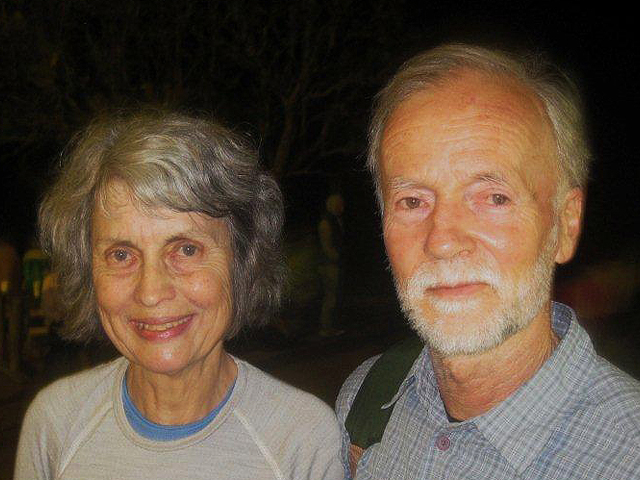
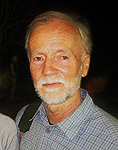
The good-looking dude pictured above is Kangaroo Valley resident Peter Stanton, one of the oldest trekkers to complete the 50 km distance. Click on the photo for a larger version which includes his wife and fellow trekker Rosemary Stanton, one of Australia's most prominent nutritionists. Peter was a member of the late lamented a cappella vocal group The Thirsty Night Singers. At the forthcoming (Sat Oct 5) fundraising silent movie/concert, his magnificent baritone voice will be heard in a rendition of Ol' Man River, from Showboat, accompanied by Robert Constable's piano and images of disadvantage and exploitation. He will also be heard as a member of The Tri Hards, an a cappella trio of blokes from The Thirsty Night Singers in their final public performance. Tickets ($25, $10 (under 16 only)) are available from the Kangaroo Valley General Store or from me.
A lot of emails from satisfied trekkers have already been received. Some examples:
|
I just want to say a big thank you to the Trek for Timor organisers and to the wonderful people who stationed the checkpoints and provided such an abundance of delicious food and refreshments and logistical support for us all yesterday. We thoroughly enjoyed the challenge of the trek, the varied terrain and scenery, and the people we met along the way. I can only imagine how many volunteer hours must had gone into planning and running such an event!
Our team, the Mountain Wonderers, also take our hat off to the clever, creative people who came up with the marvellous movie quiz. We had such fun trying to work them all out.
|
|
Yesterday I participated in the Kangaroo Valley Trek for Timor and I would like to thank all the organisers for the wonderful job they did to make this such an enjoyable experience for the participants. Leading up to the event the Newsletters were very informative and encouraging. On the day everyone was so friendly and supportive; all the checkpoints were well set up and the food was nothing short of amazing. In fact my team buddy said he would do it again just for the food!!! And to be greeted at the end by the cheering and clapping was a warm and wonderful gesture.
Thank for making my first endurance event such a great experience and I have to say I am now inspired to take on other treks in the future.
Wonderful news that the fundraising was so successful. Thank you for the opportunity to support this worthwhile cause and it is good to know we have helped to light up the lives of some people around Remexio.
All in all, a memorable day. THANK YOU.
|
|
It was spectacular....weather was perfect, track was ideal, support was exceptional, food was heavenly, organization was outstanding.....we guessed all 10 movies (and tested each other to recall the clues for the 10 songs from the previous event - thank you Libby and Paul). We loved it - hope you are all really happy and that there were no injuries that can't be fixed with blister therapy. Congratulations on the best event. My friends and I felt privileged to get to do it...it had that very special Kangaroo Valley factor that doesn't happen anywhere else - loved being able to hug people at the checkins.
Biggest thank you!
|
I should say that although I'm a nominal member of KVRP, have organised many of its fund-raisers (including the event on Oct 5), and continue to support the people of Timor-Leste, I contributed zero to this year's Trek for Timor. That was in the hands of a remarkable bunch of local stalwarts whose dedication, hard work, creativity, sound planning, combined skills, attention to detail, and so on, is a wonder to behold.
*
I like this comment - and many others - by Peter Ormonde, farmer, in response to a brilliant article - Alienation to alien nation by Julian Burnside in a recent edition of The Conversation:
|
Isn't it obscene the way Syria has behaved so inhumanely to children and civilians, violating UN resolutions and international law? Who do they think they are - us?
|
*
Tues Sept 17 2013:
On Sunday Peter and I drove to Canberra for a concert by Canberra Choral Society. Under Artistic Director Tobias Cole, the Canberra Choral Society chorus, along with other vocal groups Kompactus, New Voices and Turner Trebles, performed an entire concert of music by Australian composers, including excerpts from our epic piece from 2001 Black Ribbon. The other composers included Calvin Bowman, Daniel Brinsmead, Peter Campbell, Judith Clingan, Wilfrid Holland, Stephen Leek, Ruth Lee Martin, Hans Gunter Mommer (arranger), Matthew Orlovich, Peter Sculthorpe, Anthony Smith, Olivia Swift, Sally Whitwell, Malcolm Williamson and David Yardley - phew! Yes, it was a long program. Too long, in my view, but a great testament to the energy, variety and quality of contemporary Australian choral music. Of Canberra's choral community, too. Congratulations, and thanks, to all involved.
Black Ribbon, for six vocal soloists, choir and orchestra, was a 2001 Centenary of Federation commission. An hour long, it took us most of a year to create, but it received just one performance, to an audience of 300 or so on a Thursday night in Canberra. It was not recorded, the ABC pleading recent budget cuts. Since then, though, some of the songs from the piece, including She Wore a Black Ribbon, have been performed by The Song Company and others. The Canberra Choral Society has expressed interest in reviving the whole work, needless to say a delicious prospect!
To read Peter's irreverent, humorous but ultimately highly serious libretto, click here.
*
Preparations are almost complete for Saturday's fundraising Trek for Timor in Kangaroo Valley. Proceeds will go towards a solar lighting scheme in villages in Remexio, Timor-Leste. If you would like to donate towards this project, or sponsor a trek team or individual walker, click here.
*
Fri Sept 13 2013:
Last weekend's victory of the LNP (Liberal-National Party) in Australia's federal elections happened as anticipated. The ALP (Australian Labor Party) has no-one to blame but itself. Well, Rupert Murdoch played a part, as did Australia's shock jocks and others. But the ALP threw away, over six years, an enormous amount of the goodwill felt by many in Australia after the demise of the Howard government in 2007. I blame, most of all, union secretary Paul Howes, who was largely responsible, so I gather, for the replacement of Kevin Rudd by Julia Gillard. I've heard that there are moves for him to take Bob Carr's senate seat when Carr moves on. If that happens, [a] it will show that the ALP has still not learned any lessons from its recent defeats, and [b] I won't vote for them again. From my perspective, the Greens are looking better and better ...

|
*
Today I finished a piano piece! Well, there's more to do on it, but it's finished enough for me to send it to pianist Ambre Hammond for appraisal and comment. She posted the following message on facebook: "Completely STOKED (there is no other word!) to have just received a brilliant piece of music based on East Timorese melodies written for me by ... Martin Wesley-Smith ... Just played it through and it is jolly marvelous." I'm delighted she likes it - of course! Ambre is an excellent pianist who is planning a concert tour of East Timor with her unique Girl Piano Truck - check out the blog of her first visit to Timor here. Her CD of Piazzolla tangos with accordionist Marcello Maio, Oblivion, has given me great pleasure (I don't think I really got Piazzolla before listening to this CD).
Music Critic Dennis Koks writes: "The brilliant virtuosity of Ambre Hammond on piano and the intense, romantic passion of Marcello Maio, on piano-accordion, drawing us into the world of Piazzolla's Tango ... truly, a musical marriage forged in heaven!" The CD can be ordered directly from Ambre by emailing her here.
The photo at left [click!] is of Ambre in Spain. Other photos here, here and here.
|
*
from Radio New Zealand International, Sept 14 2013:
A freedom flotilla of Australian activists has held a secret meeting with West Papua indigenous leaders on the sea and has declared its mission completed.
The last remaining vessel was to enter Indonesian waters early this morning, but the group was deterred by threats of military force, and a lack of support from Australian authorities.
The groups met on the Australian-Indonesian border to 'ceremonially reconnect' elders, after the group travelled 5000 kilometres from Lake Eyre in Australia's south.
The group reports Arabunna Elder Uncle Kevin Buzzacott presented sacred water from Lake Eyre to the West Papuan elders, as well as ashes from Aboriginal tent embassies around Australia.
He says the group was unarmed and came in peace, unlike politicians 'who are coming selling arms to the Indonesian military, like the Americans who just last month sold them Apache attack choppers, those are to be used against West Papuans, and they know it.'
|
Melbourne activist Louise Byrne has written a letter to the flotilla. Read it here.
*
Thurs Sept 05 2013:
In today's Guardian, Marni Cordell writes;
|
Greens senator Richard Di Natale has accused shadow foreign minister Julie Bishop of inciting the Indonesian military to act against the West Papuan Freedom Flotilla.
The flotilla of Australian and West Papuan activists is sailing from Cairns to West Papua to raise awareness of human rights abuses under Indonesian rule.
Di Natale wrote to Bishop this week to express concern about her public comments on the flotilla. "This peaceful protest does not pose any threat to Indonesia and to imply otherwise has the potential to put Australian lives in danger," he wrote. "Your comments run the very real risk of inflaming an already tense situation given the threatening language already used by senior members of the Indonesian security forces."
He told Guardian Australia: "I'm concerned that Julie Bishop, who looks likely to be the new foreign minister after Saturday, is inflaming tensions and seems to be inciting the Indonesian military to act in a way that is completely disproportionate to what's being done - which is basically a peaceful protest in Indonesian waters.
[more]
|
It is indeed looking likely that after Saturday's federal election Ms Bishop will be Australia's Foreign Minister. This is too depressing to contemplate.
*
Tues Sept 03 2013:
"The Freedom Flotilla will go down in history


.gif)